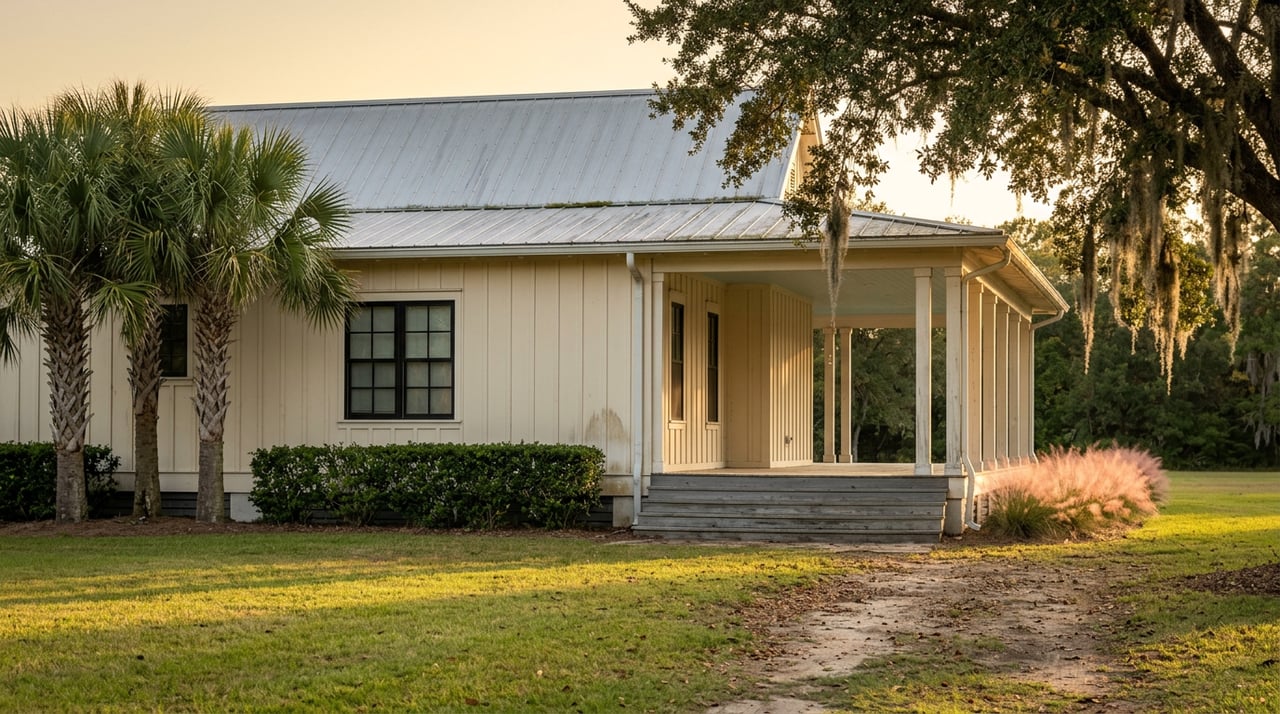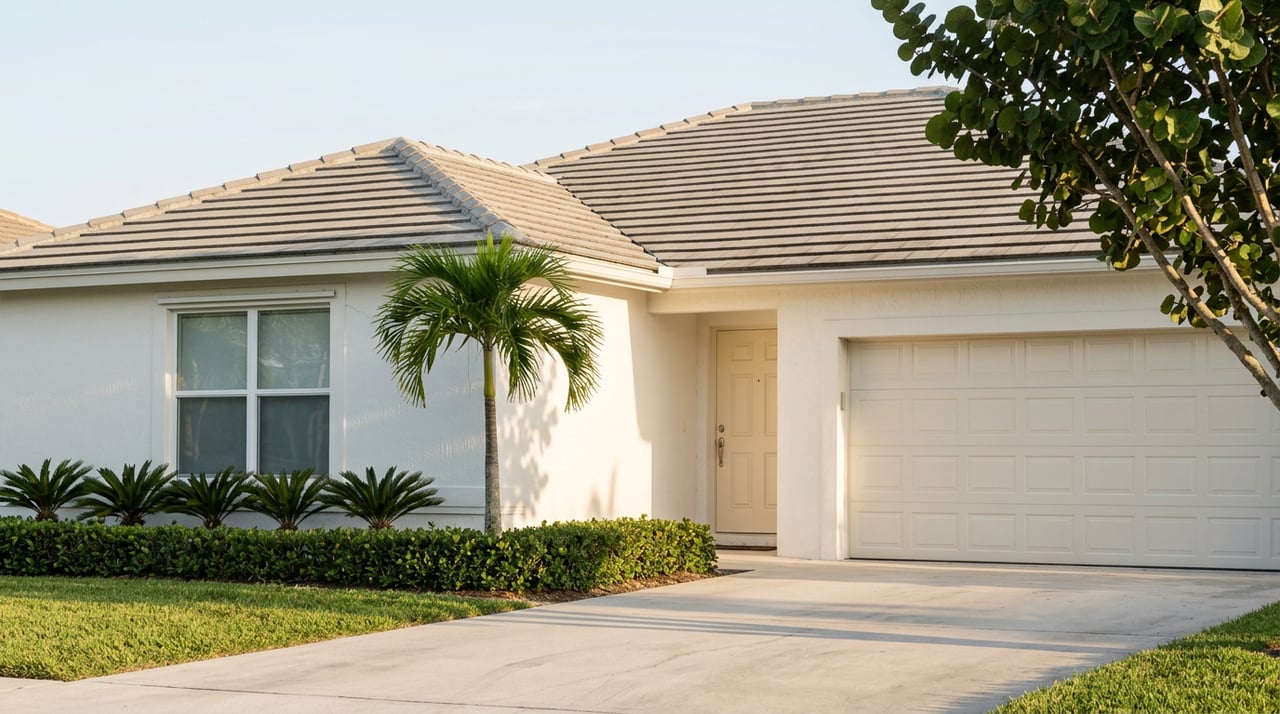
Picture a seller in Jupiter who spent the spring reading good news. Citizens Property Insurance approved rate cuts. Private carriers started competing for business again. The insurance story that had scared off buyers for three straight years finally flipped from crisis to recovery. She lists her 1974 ranch two weeks later, confident the headwind is gone. Ten days before closing, the buyer's lender calls. The 4-point inspection flagged a Federal Pacific panel. No carrier will bind a policy until it's replaced, and the loan can't fund without one.
The rate cut never mattered here, because the house was never insurable to begin with.
That gap between what the statewide insurance market is doing and what a specific 50-year-old house has to prove before anyone will cover it is the thing sellers in Jupiter, Tequesta, Palm Beach Gardens, North Palm Beach, and Juno Beach need to understand before listing this year. The headlines are true. They're also not the whole story for a large share of the county's housing stock.
What Actually Changed This Year
The numbers are real, and they're better than anything the market has seen in years. Governor Ron DeSantis's office announced that Citizens policyholders across Florida will see meaningful premium reductions starting at Spring 2026 renewal, with a statewide average cut of 8.7 percent. Palm Beach County did better than most: roughly 26,000 local Citizens policies are seeing an average reduction of 11.9 percent, one of the larger county-level drops in the state.
The mechanism behind it is depopulation. Citizens Property Insurance Corporation, the state's insurer of last resort, has been shrinking for two straight years as litigation reforms and new private carriers pulled policies back into the voluntary market. The corporation started 2025 with 936,182 policies. By early June 2026, that number had fallen to 293,465, the lowest level in 25 years. Seventeen new insurers have entered Florida since the reforms took hold, and for the first time in a decade, a meaningful share of carriers are filing for rate decreases rather than increases.
If all you read is the headline, the conclusion writes itself: the insurance crisis is over, so now is a good time to sell. For a lot of homes in this county, that's true. For the ones built between the 1960s and the 1980s, which make up much of the housing stock east of I-95 in these exact towns, it's only half the picture.
What the Rate Cut Doesn't Touch
Rate relief happens at the market level. Insurability happens at the parcel level, and it's governed by a completely different piece of paper: the 4-point inspection.
A 4-point inspection is a limited-scope report, not a full home inspection. It documents the age, condition, and material of four systems only: roof, electrical, plumbing, and HVAC. Insurers use it to decide whether a home qualifies for a new policy or a renewal, and it has nothing to do with what statewide rates are doing that year.
Most Florida insurers still require a passing 4-point before writing or renewing coverage on a home 30 years or older, and some carriers, Citizens included, still draw the line at 20. A house that fails doesn't get a discount conversation. It gets declined, and a declined policy means the buyer's lender won't fund the loan.
The failures cluster in predictable places for this county's older stock. Roofs past 15 years often don't have the five years of expected life most insurers now require. Federal Pacific and Zinsco electrical panels, both recalled decades ago but still sitting in plenty of Jupiter and Tequesta homes built before 1985, are an automatic red flag. Polybutylene plumbing, subject to a manufacturer settlement that tells you everything about how insurers view it, shows up constantly in homes from that same building boom. None of these things are affected by what Citizens filed with state regulators. They're affected by what's actually behind the drywall.
Why This Blindsides Sellers Mid-Contract
Florida's standard As-Is Residential Contract gives buyers an inspection period, and that's usually when the 4-point gets ordered, often bundled with a general inspection and a wind mitigation report to save a second site visit. If the panel or the roof fails, the buyer's insurance quote falls apart, and so does the financing behind it. What was supposed to be a routine step ten days before closing becomes a renegotiation, a delay, or a dead deal.
This is exactly the kind of timing risk a transaction-focused agent watches for from day one, not day twenty. Sellers who wait to find out what their 4-point says until a buyer orders one are negotiating from the weakest possible position: after the price is set, after the buyer has emotionally moved in, and after the clock on the inspection period is already running.
The Fix Is Cheaper Than the Problem It Prevents
Ordering the inspections before listing turns a mid-contract surprise into a pre-listing fact you control. The costs are modest relative to what they protect:
- A general home inspection typically runs $350 to $650
- A standalone 4-point inspection adds $125 to $250
- Wind mitigation adds another $100 to $200
- Bundled together for a typical single-family home, the full set runs $600 to $900
Turnaround is fast. A general inspection report usually arrives within 24 to 48 hours, and the specialty reports, 4-point and wind mitigation, often come back the same day or within a few days when scheduled together. For a seller with a roof at year fourteen or an electrical panel of unknown vintage, that's a few hundred dollars and a few days to find out exactly what a buyer's lender is going to find anyway, on a timeline that lets you fix it instead of react to it.
Turning a Passing Report Into Leverage
A wind mitigation report that comes back clean isn't just a defensive document. It's a number a buyer can take to their own insurance shopping. A home with impact windows, a hip roof, hurricane straps, and secondary water resistance can cut the windstorm portion of a policy by 30 to 60 percent. On a $4,500 annual premium, roughly typical for this market, that's $1,350 to $2,700 in savings every year the buyer owns the house. That's a real number to put in front of a buyer's agent, not a vague claim about being "well maintained."
For sellers with more runway before listing, the state's My Safe Florida Home program is worth a look. It reopened its application window on August 4, 2025, and offers a 2:1 matching grant, up to $10,000 in state funds, for wind hardening upgrades identified by a required wind mitigation inspection. The program is administered through the Florida Department of Financial Services, and the current cycle prioritizes applicants based on income and age, with homeowners 60 and older toward the front of the queue. It's not a same-week fix. It's a good option for someone planning to list next spring rather than someone already under contract.
The Escrow Detail Nobody Mentions
One more piece of friction worth knowing on either side of a closing table: a rate cut doesn't show up in a mortgage payment automatically. Most homeowners pay insurance through an escrow account, and servicers typically only recalculate that account once a year at the scheduled review, not the moment a new declarations page arrives. A buyer who assumes a lower premium means an immediately lower payment is often wrong for several months. The fix is simple, send the new declarations page to the servicer and ask for a review, but it's the kind of detail that only comes up when someone has actually walked a closing through to the other side.
Frequently Asked Questions
Does a 4-point inspection replace a full home inspection? No. It's a narrower report covering only roof, electrical, plumbing, and HVAC, built specifically for insurance underwriting. A buyer typically still wants a full general inspection alongside it.
How old does a home have to be before this matters? Thresholds vary by carrier. Forty years old triggers the requirement almost universally, thirty is common, and some insurers, including Citizens, still ask for one at twenty. If your home falls anywhere in that range, it's worth checking before you list rather than after an offer comes in.
Can a seller order these inspections themselves before listing? Yes. Sellers routinely order pre-listing 4-point and wind mitigation inspections to surface issues before negotiations start, and the reports can be shared with a buyer's insurance agent to speed up their financing timeline.
If you're weighing whether to list an older home in Jupiter, Tequesta, Palm Beach Gardens, North Palm Beach, or Juno Beach this year, the insurance headlines are worth reading, but they're not the whole answer. What matters is what your specific roof, panel, and plumbing will tell an underwriter, and finding that out before a buyer does is the difference between a clean closing and a scramble ten days out. THE CUOMO TEAM has spent 25 years walking Palm Beach County sellers through exactly this kind of transaction friction. Request your free market analysis and let's find out what your home's insurance picture actually looks like before you put a sign in the yard.