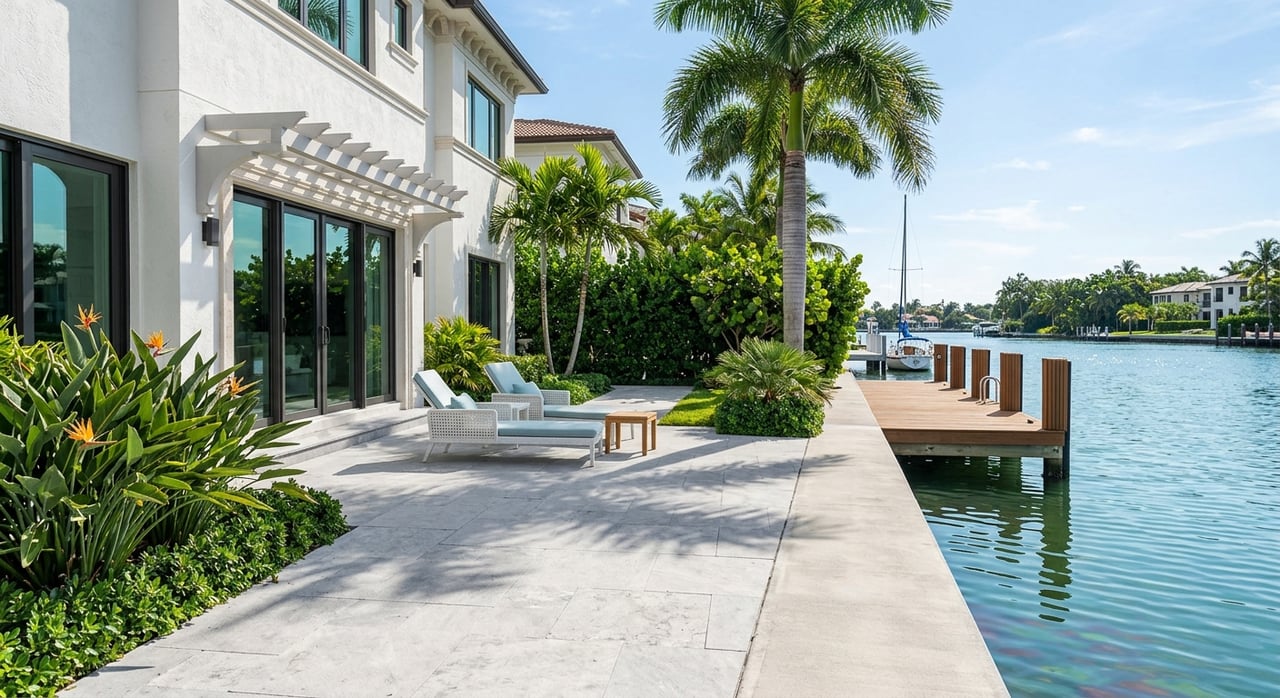
Selling a waterfront home in Palm Beach County is rarely a standard listing. Buyers are not just looking at the house itself. They are also evaluating water access, flood exposure, seawalls, docks, permits, and what future ownership may look like. If you want to sell with fewer surprises and stronger buyer confidence, it helps to prepare for the questions that are unique to waterfront property. Let’s dive in.
Why waterfront sales work differently
In Palm Beach County, waterfront can mean several different settings, including oceanfront, Intracoastal, canal-front, and inlet-adjacent property. That matters because the rules, risks, and buyer priorities can change depending on the water body.
Florida law also recognizes certain riparian rights for land that borders navigable waters, including ingress, egress, boating, bathing, fishing, and view. According to the Florida Statutes on riparian rights, those rights are tied to the land itself rather than owned separately.
For oceanfront homes, there is another layer to consider. The state’s Coastal Construction Control Line program regulates certain work near the shore to help reduce erosion, protect dunes, and address storm impacts. If your property is on the ocean, buyers may want to know whether past work required state coastal review.
Flood risk matters in every sale
Flood risk is a major part of the waterfront conversation in Palm Beach County. In fact, the county states that all residents are in a flood zone and should consider flood insurance.
That surprises some sellers, especially if they assume flood concerns only apply to homes directly on the coast. In reality, flood-zone status, insurance costs, and local water conditions can affect buyer decisions across the county.
Palm Beach County also notes that coastal areas can face storm-surge flooding and that king tides can cause sunny-day flooding even without rain. For waterfront sellers, this makes it important to be ready to discuss the property’s elevation, drainage, and how the lot sits in relation to the water.
Updated flood maps may affect your sale
The county says FEMA’s updated flood-zone maps became effective on December 20, 2024. It also reports that more than 16,000 parcels saw a base flood elevation increase of one foot or more.
If you are preparing to list, this is not something to leave until you are already under contract. Buyers, insurers, and lenders may all look closely at current flood-zone information, especially for waterfront homes.
A change in base flood elevation does not automatically mean a deal will fall apart. It does mean you should be prepared with accurate records and a clear explanation of what applies to your property.
Elevation certificates can help answer buyer questions
An elevation certificate can be an important document in a waterfront transaction. FEMA’s Floodsmart program explains that this certificate shows how high a building sits relative to expected floodwaters and can help insurers assess flood risk.
Palm Beach County notes that, locally, the elevation certificate is part of the permit record and must be submitted before occupancy. The county also says staff may be able to confirm whether one is on file for unincorporated properties through the local permit system and floodplain offices.
If you already have an elevation certificate, keep it ready before listing. If you are not sure whether one exists, checking early can save time later when a buyer starts asking about insurance and underwriting.
Docks and seawalls need close review
For many buyers, the most important waterfront features are not inside the house. They are outside, at the shoreline. A dock, seawall, boatlift, or boathouse can add appeal, but buyers usually want to know whether those improvements were properly permitted and finalized.
Palm Beach County’s Type 8 marine structure checklist covers items such as docks, seawalls, boatlifts, boathouses, dune walkovers, and boardwalks. The checklist calls for documents like an application, survey or site plan, detailed drawings, and, where required, approvals or exemptions from agencies such as the Florida Department of Environmental Protection, the Florida Inland Navigational District, the U.S. Army Corps of Engineers, and Palm Beach County Environmental Resources Management.
If work affected a common area or easement, the county checklist also calls for HOA approval or easement-release documents. That means buyers may look beyond the visible condition of a dock or seawall and focus on the paper trail behind it.
Permit history can shape buyer confidence
In Palm Beach County, marine structures and floodplain improvements often involve more than one level of review. The county’s Permit Center handles permitting for unincorporated areas, while municipalities may have their own local departments and requirements.
This is one reason waterfront buyers often ask detailed due diligence questions. They may want to confirm whether permits were issued, whether work was properly closed out, and whether the existing improvements match what the records show.
If you have completed renovations, shoreline work, or major upgrades, gathering the permit history before you list can make the process smoother. It also helps reduce the chance of delays once a buyer begins inspections and document review.
Major remodels may trigger floodplain issues
Palm Beach County states that new or substantially improved floodplain structures must be elevated above the 100-year flood elevation. The county also explains that substantial improvement generally means repair, rehabilitation, addition, or other work costing 50% or more of the structure’s market value.
If you completed a major remodel, addition, or rebuild, buyers may want to see permit records and any elevation-related documents tied to that work. This is especially important if the improvements were extensive enough to raise questions about floodplain compliance.
Having those records ready does not just help answer questions. It can also show buyers that the home was maintained and improved with care.
What to gather before listing
A well-prepared waterfront seller usually benefits from assembling documents early. Based on the county’s marine structure and floodplain requirements, your listing packet may include:
- Current survey
- Permit history for docks, seawalls, boatlifts, boathouses, and other marine structures
- Any elevation certificate on file
- Approved marine drawings or manufacturer specifications
- HOA approvals or easement documents, if applicable
- Records showing whether permits were finalized
For oceanfront property, it is also smart to confirm whether any work required review under the Florida Coastal Construction Control Line program.
Be clear about water access
Not all waterfront access offers the same use or experience. Buyers may look closely at the type of water body, the access route, and how the shoreline improvements support actual use.
In practice, that means your marketing should be accurate and specific. If the home has a dock, seawall, boatlift, or a particular style of access to the Intracoastal, canal system, or ocean route, buyers will likely want those details confirmed through documents and surveys.
This is also where experienced local guidance matters. In waterfront sales, value is often tied less to generic square footage and more to usable water access, shoreline improvements, flood exposure, elevation, and expected maintenance.
Municipal rules may be different
One important point for Palm Beach County sellers is that county guidance does not always apply the same way inside every city or town. The county specifically notes that municipal residents should work with their own local officials because requirements can differ.
That is especially relevant in places such as Jupiter, Tequesta, and North Palm Beach, where local building departments or floodplain managers may oversee parts of the process. If your home is within a municipality, checking local records early can help you avoid last-minute surprises.
Insurance timing can affect closing
Flood insurance can also affect the transaction timeline. Palm Beach County notes that new flood insurance policies take 30 days to go into effect.
If your buyer needs new flood coverage to close, that waiting period can become a real timing issue. Sellers who prepare early and provide clear property records may help buyers and lenders move through underwriting with fewer delays.
The county also notes that windstorm insurance does not cover flood damage. That is another reason buyers often take a close look at flood-zone data, elevation, and insurance options before they commit.
How to position your waterfront home
When you sell a waterfront home in Palm Beach County, preparation is part of the marketing strategy. Strong presentation still matters, but serious buyers also want confidence in the property’s documents, shoreline improvements, and flood-related details.
The most effective approach is usually simple: be organized, be accurate, and be ready to answer technical questions in plain language. When you can show buyers what was done, when it was permitted, and how the property functions on the water, you create trust from the start.
If you are thinking about selling and want guidance tailored to your property, Kim Cuomo can help you prepare, market, and navigate the process with the local insight that waterfront sales demand.
FAQs
What makes selling a waterfront home in Palm Beach County different from selling a non-waterfront home?
- Waterfront sales often involve added buyer questions about flood zones, elevation, docks, seawalls, permits, insurance, and the type of water access the property offers.
What documents should sellers gather for a waterfront home in Palm Beach County?
- Helpful documents often include a current survey, marine structure permit history, finalized permit records, elevation certificates, approved drawings, and any HOA or easement approvals tied to shoreline work.
Do Palm Beach County waterfront sellers need to check dock and seawall permits?
- Yes. Buyers commonly review whether docks, seawalls, boatlifts, and similar improvements were properly permitted and closed out, especially when those features are central to the property’s value.
How do updated flood maps affect waterfront home sales in Palm Beach County?
- Updated flood maps can affect base flood elevation, insurance questions, lender review, and buyer decision-making, so sellers should confirm current flood-zone information before listing.
Are flood insurance issues only important for oceanfront homes in Palm Beach County?
- No. Palm Beach County states that all residents are in a flood zone and should consider flood insurance, so flood-related questions can come up across the county, not just on the ocean.
Do municipal waterfront homes in places like Jupiter or Tequesta follow Palm Beach County permit rules?
- Not always. Palm Beach County says municipal properties may have separate local requirements, so sellers should check with their city or town officials when the home is not in unincorporated county areas.