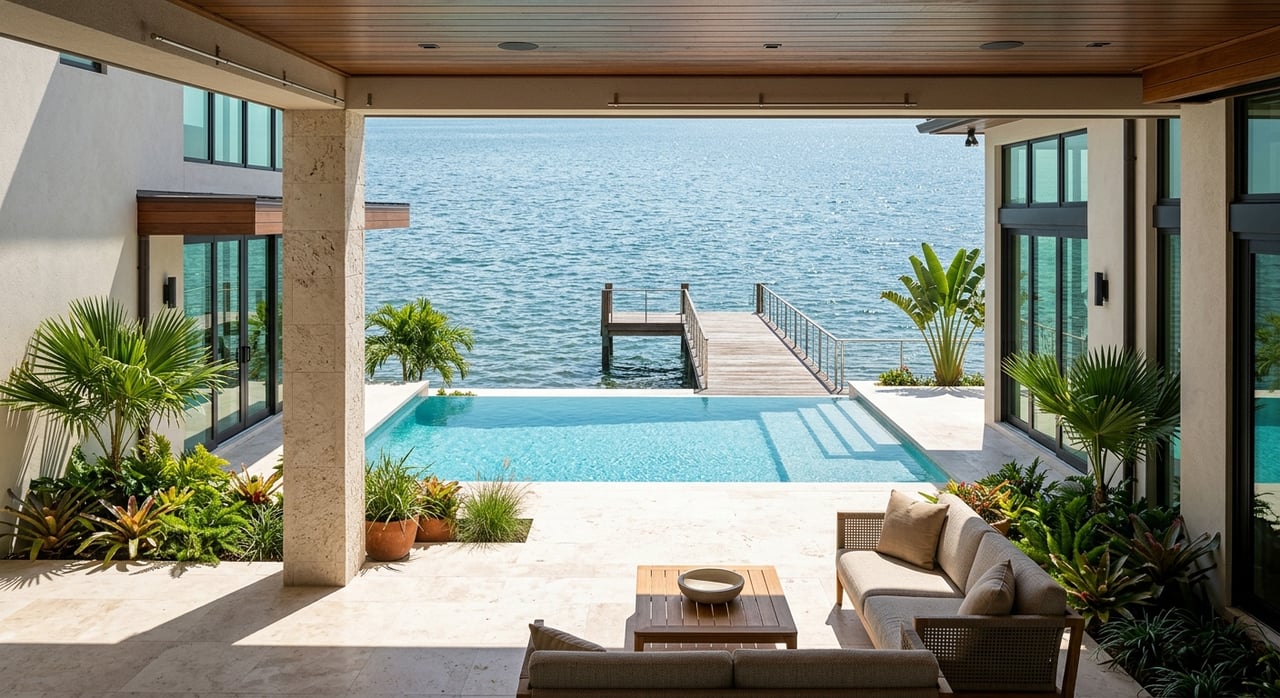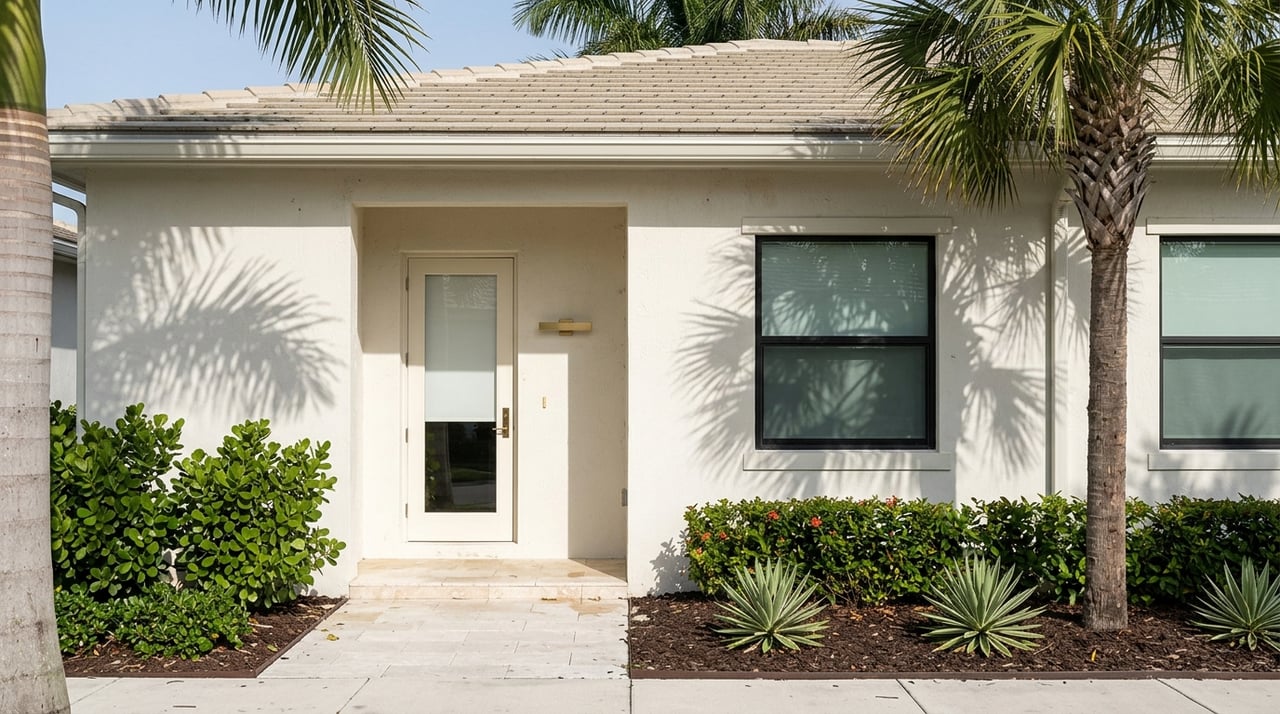
Waterfront homes in Martin County can look similar on a map, but their values can be very different in real life. If you are buying, selling, or simply trying to understand what your property may be worth, broad county averages only tell part of the story. The real drivers are much more specific, from the type of water behind the home to flood costs, dock condition, and what the lot allows you to build. Let’s dive in.
Why waterfront values vary so much
Martin County is not one single waterfront market. It includes the Atlantic coastline, the St. Lucie Inlet, the Indian River Lagoon, the St. Lucie River, Hobe Sound, and the Atlantic Intracoastal Waterway. That geography creates very different ownership experiences, and buyers usually price those differences into what they are willing to pay.
The county also maintains navigation and shoreline systems that matter to property owners. Martin County notes that dredging at the St. Lucie Inlet is used every two to four years to control shoaling and help keep boat traffic moving safely. In a place where boating and fishing are a meaningful part of daily life, water access is not just a view feature. It is a utility feature.
Martin County market context
Before you look at waterfront homes specifically, it helps to know the countywide backdrop. For full-year 2025, Martin County recorded 2,071 closed single-family sales, with a median sale price of $599,000 and an average sale price of $979,138. The county also posted 93.2% of original list price received, a median time to contract of 61 days, 956 cash sales, and 785 active single-family listings at year-end.
Those numbers suggest two things. First, the market stayed fairly steady on pricing during 2025. Second, the large gap between the median and average sale price points to a higher-end segment that pulls the average upward, which is often relevant when you start discussing waterfront properties.
Quarterly data tells a similar story. In Q1 2025, the county had 442 closed single-family sales, a median price of $595,500, and 6.2 months of supply. By Q4 2025, there were 547 closed sales, a $600,000 median, and 4.5 months of supply, showing relatively stable prices alongside tighter inventory.
Waterfront is a micro-market
One of the biggest mistakes buyers and sellers make is treating all waterfront homes as one category. In Martin County, that approach can lead to poor pricing decisions. A canal-front home with limited boating utility should not be compared too loosely with a riverfront property or a home with stronger access to the Intracoastal or ocean routes.
Community-level data helps show how uneven the county can be. In Q4 2025, median single-family sale prices ranged from $477,000 in Jensen Beach to $21.775 million on Jupiter Island. Other community medians included Sewall’s Point at $1.19 million, North River Shores at $669,950, Palm City at $650,000, Stuart at $625,000, Hobe Sound at $620,000, and Port Salerno at $495,000.
These are not waterfront-only figures, and lower sales counts in some places can make medians swing more sharply. Still, they show why waterfront value analysis has to start with the right micro-market instead of a countywide average.
Water access often drives value
Ocean access versus sheltered water
Not all water access serves the same buyer goals. The St. Lucie Inlet connects the Atlantic Ocean to the Indian River Lagoon, the St. Lucie River, Hobe Sound, and the Atlantic Intracoastal Waterway. That makes access patterns especially important when buyers care about boating convenience.
In practice, value often rises when access is easier, more predictable, and better aligned with how a buyer wants to use the property. A home on sheltered canal frontage may still appeal strongly, but it will be evaluated differently than a home with more direct or practical boating routes. The question is not simply whether the lot is on the water. The question is how usable that water really is.
Navigation conditions matter
County officials note that storms and shoaling can affect navigation near the inlet. That means buyers may look beyond the listing photos and ask practical questions about reliability, route conditions, and day-to-day boating use. For some buyers, these details materially affect how much value they assign to a home.
Lot buildability affects what buyers can do
Waterfront value is also shaped by what the lot allows. Martin County requires shoreline protection zones for waterfront lots on navigable waterways, including canals, and those rules can vary by lot size and creation date. Importantly, the county says these protection areas are separate from standard zoning setbacks.
That distinction matters because it can affect usable yard area, pool placement, additions, and future expansion plans. Two homes may have similar frontage and similar square footage, yet one lot may offer much more functional outdoor use than the other.
Access limits near the shoreline
Construction within the shoreline protection zone is generally limited. The county says residential accessways may be allowed up to 12 feet wide, and where mangroves or wetlands are present, the access allowance may narrow to 6 feet. That can create a meaningful difference in how owners reach the water and how the lot feels in everyday use.
If you are comparing waterfront homes, this is one reason broad averages can miss the mark. Similar frontage does not always mean similar usability.
Docks, boatlifts, and seawalls can change pricing
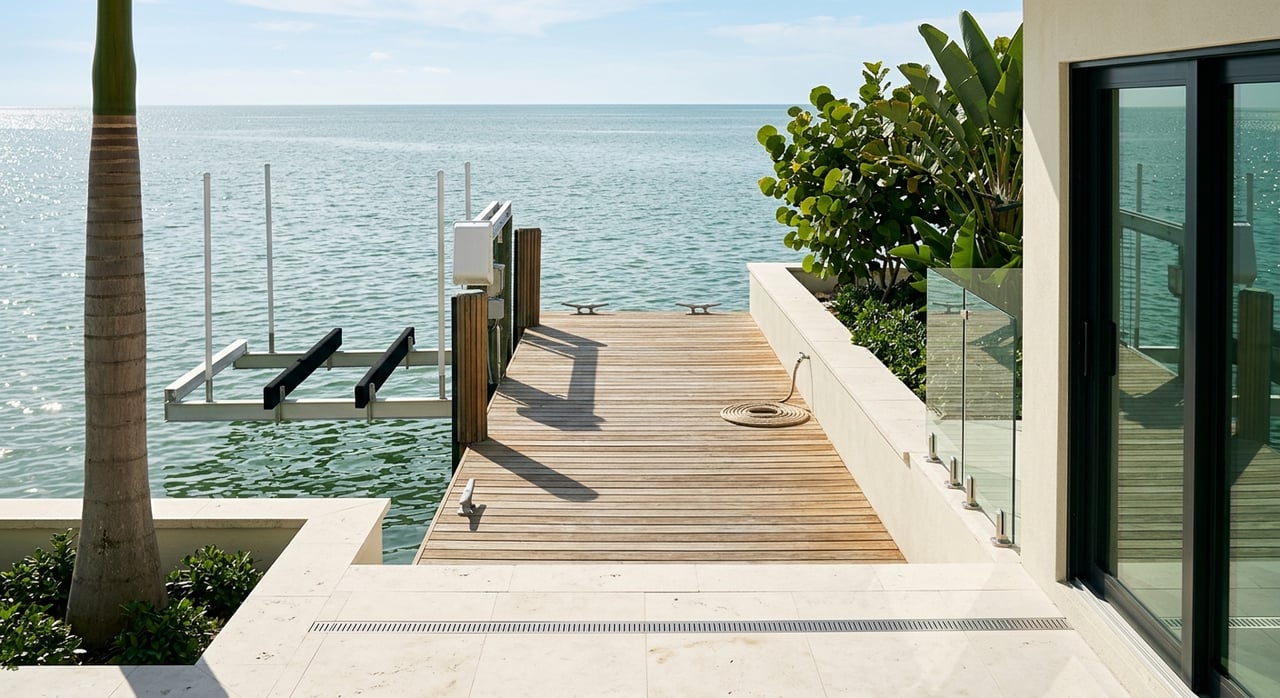
A dock or seawall can add appeal, but condition is critical. Martin County requires permits for docks, boatlifts, and seawalls, and replacement or major repair can be expensive. Buyers tend to pay closer attention when a property’s waterfront infrastructure appears older, poorly documented, or in uncertain condition.
For sellers, this can affect both pricing and buyer confidence. A well-maintained waterfront setup with clear permit history may support stronger interest. A home with deferred shoreline work may still sell well, but buyers often factor the likely post-closing cost into their offers.
Flood zones and insurance shape affordability
Waterfront buyers in Martin County also need to understand flood-related carrying costs. The county notes that FEMA flood zones are used to determine flood insurance rates and certain building-code requirements. Homes in Special Flood Hazard Areas with federally backed mortgages must carry flood insurance.
Martin County’s Community Rating System Class 5 status provides a 25% premium reduction for unincorporated residents in Special Flood Hazard Areas and a 10% reduction in non-SFHA areas. That can matter when buyers compare monthly ownership costs between two otherwise similar properties.
Elevation standards influence future work
The county also states that new or substantially improved structures in Special Flood Hazard Areas must have the lowest finished floor at least one foot above base flood elevation. For buyers planning major renovation work, that requirement can become part of the budget conversation.
It is also important to remember that flood zones and evacuation zones are not the same thing. Buyers and sellers sometimes confuse the two, but they serve different purposes in a transaction.
Interior condition still matters a lot
Even on the water, the home itself still drives value. Martin County’s property appraiser tracks features such as year built, effective year built, roof structure, foundation, floor covering, heating, bathrooms, kitchens, fireplaces, and other property characteristics. That kind of detail helps explain why two homes with similar frontage can still sell at very different prices.
A renovated, storm-ready home may attract a different level of interest than a similar home that feels dated or needs major updates. Waterfront location can create a price premium, but condition and feature set still shape how large that premium becomes.
How to analyze a waterfront comp correctly
If you are trying to estimate the value of a waterfront home, the best comparable sales are usually narrow and specific. Start with properties on the same type of water, in the same part of the county, with similar lot size, frontage, flood-zone context, dock or seawall status, and renovation level. That is usually far more useful than comparing against all county sales.
Martin County’s property appraiser publishes historical sale data and tax-roll exports that include sale date, recorded date, sale price, sales validity, and property features. That allows parcel-level review instead of relying only on broad summary data.
What sellers should focus on
If you are selling, focus on the features buyers cannot easily replace after closing. These may include:
- Water access utility
- Lot usability near the shoreline
- Dock, boatlift, and seawall condition
- Flood insurance impact
- Renovation level and storm-readiness
A strong pricing strategy should reflect those details, not just the fact that the home is on the water.
What buyers should focus on
If you are buying, look beyond surface appeal. A beautiful view does not always tell you how functional, flexible, or cost-efficient the property will be long term. Comparing recent sales is important, but so is understanding what work may be needed after closing.
That includes shoreline limitations, permit-related questions, insurance costs, and the true condition of waterfront improvements. In many cases, the better value is not the home with the lowest asking price. It is the home with the most favorable mix of access, condition, and future usability.
Why local analysis matters most
Countywide medians are helpful for context, but they are not enough for waterfront pricing. The most important question is usually not what the Martin County median home price is. It is what similar riverfront, canal-front, or Intracoastal-adjacent homes in the same micro-market have sold for recently, and how much work a new owner may need to take on.
That is where local experience and careful comparison matter. When you narrow the analysis to the right stretch of water and the right set of property traits, pricing becomes much more useful and much more accurate.
If you want a clearer picture of what your Martin County waterfront home may be worth, or you want help evaluating a purchase with confidence, Kim Cuomo can help you make sense of the details and move forward with a practical strategy.
FAQs
How are Martin County waterfront home values different from regular home values?
- Waterfront home values in Martin County are shaped by additional factors such as water access, shoreline rules, dock and seawall condition, flood-zone costs, and lot usability near the water.
What affects waterfront home values most in Martin County?
- Some of the biggest factors are the type of water frontage, boating utility, flood insurance impact, shoreline protection setbacks, and whether the home and waterfront improvements are updated and well maintained.
Are countywide median prices useful for valuing a Martin County waterfront home?
- Countywide medians are useful for general market context, but they are not precise enough for waterfront pricing because Martin County waterfront homes perform as smaller micro-markets.
Do flood zones matter when buying a waterfront home in Martin County?
- Yes. Flood zones can affect insurance requirements, monthly ownership costs, and building standards for new or substantially improved structures.
Why can two Martin County waterfront homes with similar views have different values?
- Two homes with similar views can still differ in value because of lot restrictions, access conditions, flood-zone costs, dock or seawall condition, and the home’s renovation level and overall features.